
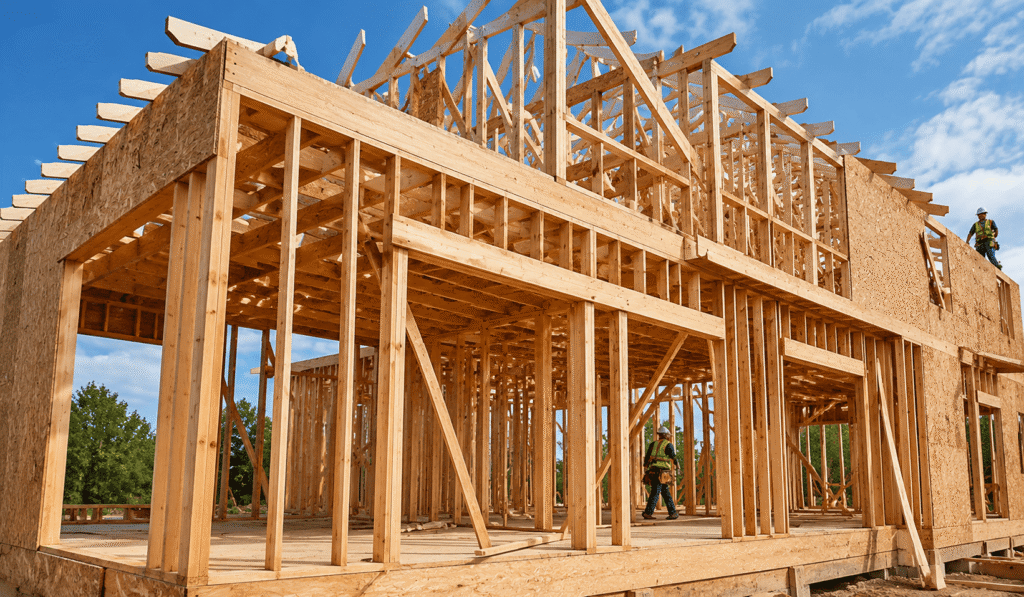
Wood framing is one of the most common construction methods used for homes, additions, multi-family buildings, and commercial projects. When people search for typical wood framing details, they want to understand how walls, floors, and roofs are framed, what materials are used, and what makes the structure strong, level, and reliable.
Typical wood-framing details include the standard layout, spacing, connections, and structural components used to build walls, floors, ceilings, and roofs. These details include sill plates, studs, joists, headers, beams, rafters, trusses, sheathing, blocking, and fasteners. When installed correctly, they help create a durable and code-ready structure.
For property owners, builders, and developers, understanding basic wood frame construction details makes project planning easier. For professional framing contractors like Woodzio Framing, these details are part of everyday accuracy, quality control, and dependable construction work.
What Are Typical Wood Framing Details?
Typical wood framing details refer to the standard parts, layouts, spacing, connections, and installation practices used to build a wood-framed structure. These details explain how framing members are placed, how loads are transferred, how openings are supported, and how the building frame stays stable.
A properly framed building is not just a collection of lumber. Every stud, joist, header, beam, plate, and connector has a purpose. The frame must carry vertical loads from the roof and upper floors, resist lateral forces such as wind, support windows and doors, and create a reliable base for insulation, drywall, siding, roofing, and mechanical systems.
In residential and commercial wood framing, even small layout mistakes can create bigger problems later. Poor spacing, weak connections, incorrect header sizing, or moisture exposure can affect wall alignment, floor strength, and long-term durability.
Main Components of Wood Framing
A strong wood frame starts with understanding the basic components used in construction.
Sill Plate
The sill plate is the bottom piece of lumber attached to the foundation. It connects the wood frame to the concrete base and helps transfer loads into the foundation. In many projects, sill plates are pressure-treated because they are closer to concrete and potential moisture exposure.
Floor Joists
Floor joists are horizontal framing members that support the floor system. They run across open spans and carry the weight of flooring, furniture, walls, and people. Proper spacing and support are important to prevent bouncing, sagging, or uneven floors.
Rim Joist
The rim joist closes the ends of the floor joists and helps create a solid edge around the floor system. It also supports wall framing above and helps maintain the shape of the floor platform.
Wall Studs
Wall studs are vertical framing members used in interior and exterior walls. They are commonly installed at regular spacing, depending on the design, load requirements, and building specifications. Studs help carry loads, support wall finishes, and create cavities for insulation and utilities.
Bottom Plate and Top Plate
The bottom plate sits at the base of a framed wall, while the top plate sits at the top. Many walls use double top plates to help tie wall sections together and distribute loads from above.
Headers
Headers are horizontal structural members installed above doors, windows, and other openings. Since openings interrupt the normal stud layout, headers help transfer the weight above the opening to the surrounding studs.
Jack Studs and King Studs
King studs run from the bottom plate to the top plate beside an opening. Jack studs sit inside the king studs and support the header. Together, they provide strength around doors and windows.
Rafters and Trusses
Rafters are sloped framing members that support the roof. Trusses are engineered roof framing systems built from smaller wood members connected in a designed pattern. Both systems must be installed correctly to carry roof loads, snow loads, and roofing materials.
Sheathing
Sheathing is installed over wall, floor, or roof framing to create a solid structural surface. It also helps resist movement and provides a base for exterior finishes, roofing, and weather barriers.
Typical Wood Framing Details and Their Purpose
Understanding the purpose of each framing detail helps property owners, builders, and developers see how every part of the structure works together. A strong wood frame depends on proper layout, correct connections, and accurate installation of each component.
| Wood Framing Detail | Purpose in Construction |
| Sill Plate | Connects the wood frame to the foundation and helps transfer loads into the base structure. |
| Wall Studs | Support walls, carry vertical loads, and create space for insulation, wiring, and utilities. |
| Floor Joists | Support floors and help distribute weight across the floor system. |
| Rim Joist | Closes the floor framing edges and helps keep the floor platform stable and square. |
| Top Plate & Bottom Plate | Tie wall studs together and create a strong frame for wall sections. |
| Headers | Support loads above doors, windows, and other wall openings. |
| Beams | Carry heavier loads and support wider spans where extra strength is needed. |
| Rafters or Trusses | Create the roof structure and support roofing materials, snow loads, and wind forces. |
| Sheathing | Adds strength to walls, floors, and roofs while creating a base for finishes and weather barriers. |
| Blocking | Adds stability, support, fire stopping, and proper spacing between framing members. |
Common Wood Framing Methods
Different wood framing techniques are used depending on the building type, budget, design, and structural requirements.
Platform Framing
Platform framing is one of the most common methods used in modern residential construction. Each floor is built as a separate platform. The floor system is framed first, then walls are built on top of that platform, followed by the next level or roof system.
This method is popular because it is practical, efficient, and easier to manage on-site. It also works well for residential framing and many light commercial projects.
Balloon Framing
Balloon framing uses long vertical studs that run from the foundation up to the roof. This method was more common in older buildings but is less common today because it can be more difficult to build and may raise fire-spread concerns if not properly blocked.
Post-and-Beam Framing
Post-and-beam framing uses larger vertical posts and horizontal beams to carry loads. It is often used for open spaces, heavy timber designs, or projects where fewer interior load-bearing walls are desired.
Advanced Framing
Advanced framing uses planning techniques to reduce unnecessary lumber, improve insulation, and increase energy efficiency. When done properly, it can reduce material waste while still maintaining structural strength.
Typical Wall Framing Details
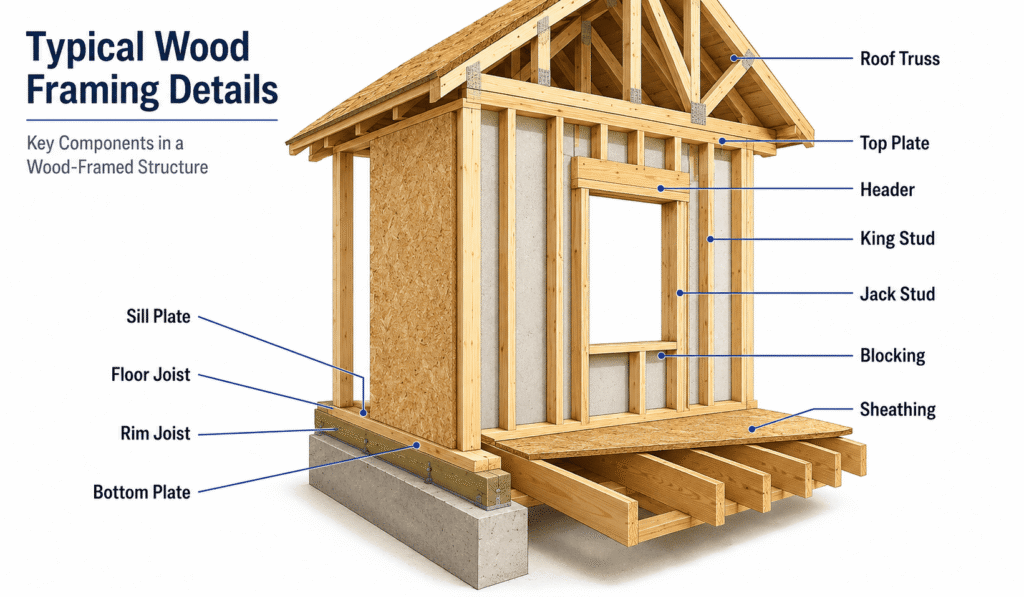
Wall framing is one of the most important parts of wood construction. A typical framed wall includes bottom plates, studs, top plates, headers, blocking, sheathing, and openings for windows and doors.
Good wall framing should be straight, square, properly braced, and aligned with the floor and roof systems. Exterior walls need extra attention because they carry roof loads, resist wind pressure, hold insulation, and support exterior cladding.
For load-bearing walls, correct stud spacing and header installation are especially important. For non-load-bearing interior walls, the focus is usually on layout, alignment, and support for drywall, doors, and interior finishes.
Typical Floor Framing Details
Floor framing details include joist size, joist spacing, beam placement, rim joists, subfloor sheathing, blocking, and support points. The floor system must be strong enough to carry live loads and dead loads without excessive movement.
Professional framing contractors pay close attention to levelness, joist crowns, fastening patterns, and proper support around stair and mechanical openings, as well as bearing walls. A well-framed floor makes every subsequent trade, including plumbing, electrical, HVAC, flooring, and drywall, easier.
Typical Roof Framing Details
Roof framing details depend on the roof design. A simple gable roof may use rafters or trusses, while more complex roofs may include valleys, hips, dormers, and multiple load paths.
Roof framing must account for roof pitch, span, snow load, wind exposure, sheathing, ventilation, and roofing material. In Alberta, this becomes especially important because framing must be planned for local climate conditions, including cold weather, seasonal moisture, and snow load requirements.
Materials Used in Wood Framing
Typical framing materials include dimensional lumber, engineered wood, OSB, plywood, nails, screws, metal connectors, anchor bolts, and structural hangers.
Common lumber choices may include SPF, Douglas fir, or other structural-grade softwoods, depending on availability, engineering requirements, and project location. Engineered products such as LVL beams, I-joists, and glulam beams may be used when longer spans, greater strength, or improved dimensional stability are needed.
The right material selection depends on the design, load requirements, span length, moisture exposure, and local building requirements.
Moisture Protection in Wood Framing
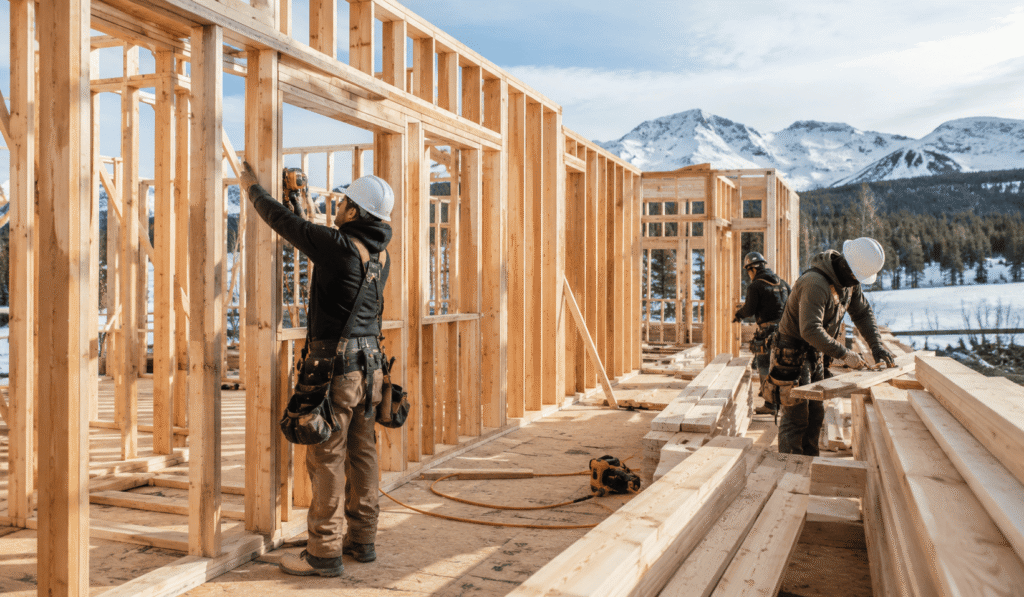
Moisture is one of the biggest concerns in wood framing. Wood can perform very well when properly protected, but poor water management can lead to swelling, mould, rot, or structural weakness over time.
Good moisture protection includes properly storing lumber on site, keeping framing materials off wet ground, installing weather barriers correctly, allowing ventilation, and protecting exposed framing before exterior finishes are complete.
In Alberta, moisture control is especially important because weather conditions can change quickly. Professional framing contractors understand how to protect materials and maintain quality during active construction.
Common Wood Framing Mistakes to Avoid
Some common framing mistakes include incorrect layout, uneven walls, poor fastening, weak headers, missing blocking, unprotected sill plates, improper joist support, and poor coordination with mechanical openings.
Another major mistake is treating framing as only a rough construction stage. In reality, framing affects almost everything that follows. If the walls are not straight, drywall becomes more difficult to install. If floors are uneven, finishing becomes more difficult. If openings are not framed correctly, windows and doors may not fit properly.
This is why experienced contractors focus on accuracy from the beginning. A clean, level, and properly supported frame helps the entire construction project move forward with fewer delays and fewer costly corrections.
Contractor Tip: Why Small Framing Details Matter
In wood framing, small details can affect the entire construction project. A wall that is slightly out of line, a weak header, missing blocking, poor joist support, or uneven floor framing can create problems later for drywall, flooring, roofing, doors, windows, and exterior finishes.
Experienced framing contractors focus on accuracy from the beginning because proper framing reduces rework, improves job-site safety, and helps every next trade complete their work more efficiently. For residential and commercial projects, these details are not just technical steps. They are what make the structure stronger, cleaner, and more reliable over time.
For Woodzio Framing, this level of detail is especially important on Alberta projects, where framing must be planned with strength, weather exposure, snow loads, and long-term durability in mind.
Wood Framing Details for Alberta Projects
For Alberta residential and commercial projects, wood framing should be planned with climate, building requirements, snow loads, moisture control, and long-term durability in mind. Cold winters, freeze-thaw cycles, and seasonal moisture can all affect how framing should be protected during and after construction.
Woodzio Framing works in this type of construction environment, where quality framing is about more than speed. It’s about proper layout, a clear understanding of structure, and clean execution. Whether the project involves a custom home, residential development, addition, or commercial framing work, the frame must be built with attention to detail.
Why Professional Framing Contractors Matter
A strong building starts with a strong frame. Professional framing contractors understand how to read plans, follow structural details, place materials correctly, coordinate with other trades, and build in accordance with project requirements.
Hiring experienced wood framing contractors can help reduce costly mistakes, delays, rework, and long-term structural problems. For property owners and builders, this means better project flow and a stronger final structure.
Professional framing also supports better safety on site. Proper bracing, lifting methods, fastening, and installation practices all play an important role in protecting workers and maintaining project quality.
Build Stronger Structures with the Right Wood Framing Details
Understanding typical wood framing details helps homeowners, builders, and developers see how much planning goes into a strong structure. From sill plates and studs to joists, headers, sheathing, and roof systems, every framing detail contributes to strength, durability, and long-term performance.
For residential and commercial wood framing in Alberta, Woodzio Framing provides skilled framing solutions focused on accuracy, structural quality, and dependable construction results. A building is only as strong as the frame behind it, and proper framing details make that strength possible.
FAQ’s
1. What are typical wood framing details?
Typical wood-framing details include the standard construction layouts, connections, components, and installation methods used to build walls, floors, ceilings, and roofs in wood-framed buildings.
2. What is the most common wood framing method?
Platform framing is one of the most common methods in modern residential wood construction because it is efficient, practical, and adaptable to many building designs.
3. What are the main parts of a wood frame?
The main parts include sill plates, studs, joists, rafters, trusses, headers, beams, top plates, bottom plates, rim joists, blocking, and sheathing.
4. Why are headers important in wood framing?
Headers support the weight above openings, such as doors and windows. Without proper headers, the structure around openings can weaken, shift, or fail to carry loads correctly.
5. Is wood framing good for commercial buildings?
Yes, wood framing can be used in many commercial projects depending on the design, building size, code requirements, and engineering specifications.
6. Why should wood framing be handled by professionals?
Wood framing requires accuracy, structural knowledge, proper tools, and code awareness. Professional framing contractors help ensure the structure is built safely, correctly, and efficiently.