
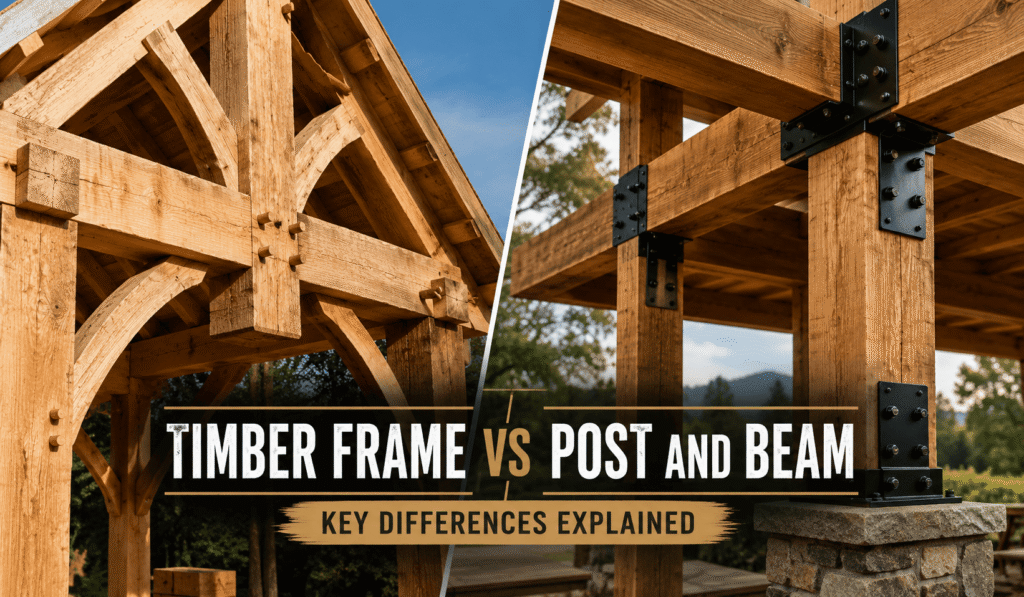
Timber and post and beam frame construction are heavy wood framing methods used to create strong structures, open interiors, vaulted ceilings, and exposed beam designs. The main difference is how the wood members are connected. Timber frame construction uses traditional wood-to-wood joinery, such as mortise-and-tenon joints secured with wooden pegs. Post and beam construction uses large posts and beams connected with metal plates, bolts, brackets, or other structural fasteners.
Both methods can create beautiful, durable buildings, but they are not identical. Timber framing is often chosen for its traditional craftsmanship, clean joinery, and timeless appearance. Post and beam construction is often selected for its flexibility, faster installation, and ability to create a strong exposed-beam look with modern connection methods.
For homeowners, builders, and property owners comparing timber frame vs post and beam, the right choice depends on design goals, budget, structural needs, construction timeline, and the level of visible craftsmanship desired.
What Is Timber Frame Construction?
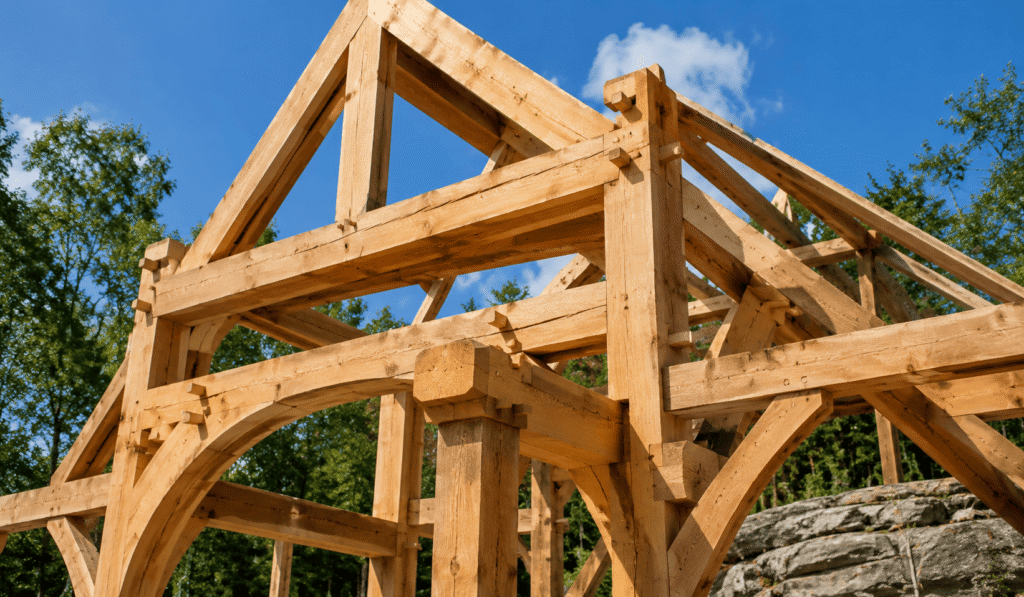
Timber frame construction is a traditional method that uses large wooden timbers joined together with carefully crafted wood connections. Instead of depending mainly on metal hardware, the frame is designed so that the timber members fit into each other with precision.
One of the most common joints in timber framing is the mortise and tenon joint. In this connection, one timber has a mortise, while the other has a tenon. The tenon fits tightly into the mortise and is usually secured with a wooden peg.
This method has been used for centuries because it creates a strong, stable, and visually impressive structure. Many timber frame homes leave the beams exposed inside, which gives the space a warm, natural, and handcrafted appearance.
Timber framing is often associated with custom homes, cabins, lodges, heritage-style buildings, and high-end cottages, as well as exposed wood interiors. It is also valued because the structure itself becomes part of the architectural design.
What Is Post and Beam Construction?
Post-and-beam construction is also a heavy-wood framing method. It uses vertical posts and horizontal beams to support the structure and transfer loads. Like timber framing, it can create open layouts, high ceilings, wide spans, and exposed structural wood features.
The main difference is the connection method. Post-and-beam construction usually connects the wood members with metal fasteners, steel plates, bolts, screws, brackets, or concealed connectors. These metal connections help hold the frame together and transfer structural loads.
Post and beam construction can still look rustic, natural, and high-end, but it generally does not require the same level of traditional joinery as timber framing. Because of this, it may be more flexible for modern building projects, additions, commercial structures, porches, decks, and custom homes that desire exposed beams without fully traditional timber joinery.
Timber Frame vs Post and Beam: Main Comparison
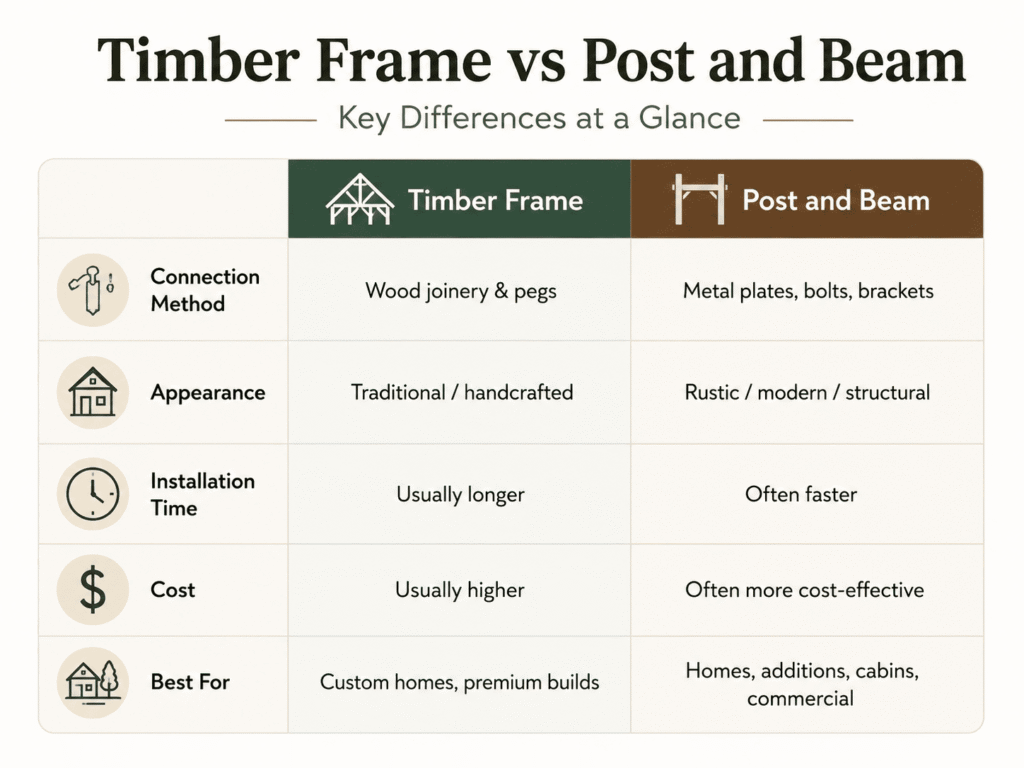
| Feature | Timber Frame Construction | Post and Beam Construction |
| Main Connection Method | Wood joinery and wooden pegs | Metal plates, bolts, brackets, or fasteners |
| Appearance | Traditional, handcrafted, clean wood connections | Rustic, modern, or industrial depending on hardware |
| Skill Required | Requires specialized joinery and craftsmanship | Requires skilled framing and proper hardware installation |
| Installation Time | Usually longer due to detailed joinery | Often faster because connections are simpler |
| Cost | Often higher because of labor and craftsmanship | Often more budget-friendly than full timber framing |
| Best For | Custom homes, exposed timber interiors, premium builds | Homes, cabins, additions, decks, commercial projects |
| Visual Style | Warm, natural, traditional | Flexible, modern, structural, or rustic |
| Structural Support | Interlocking wood frame | Posts and beams connected with engineered hardware |
Key Difference: Joinery and Connection Method
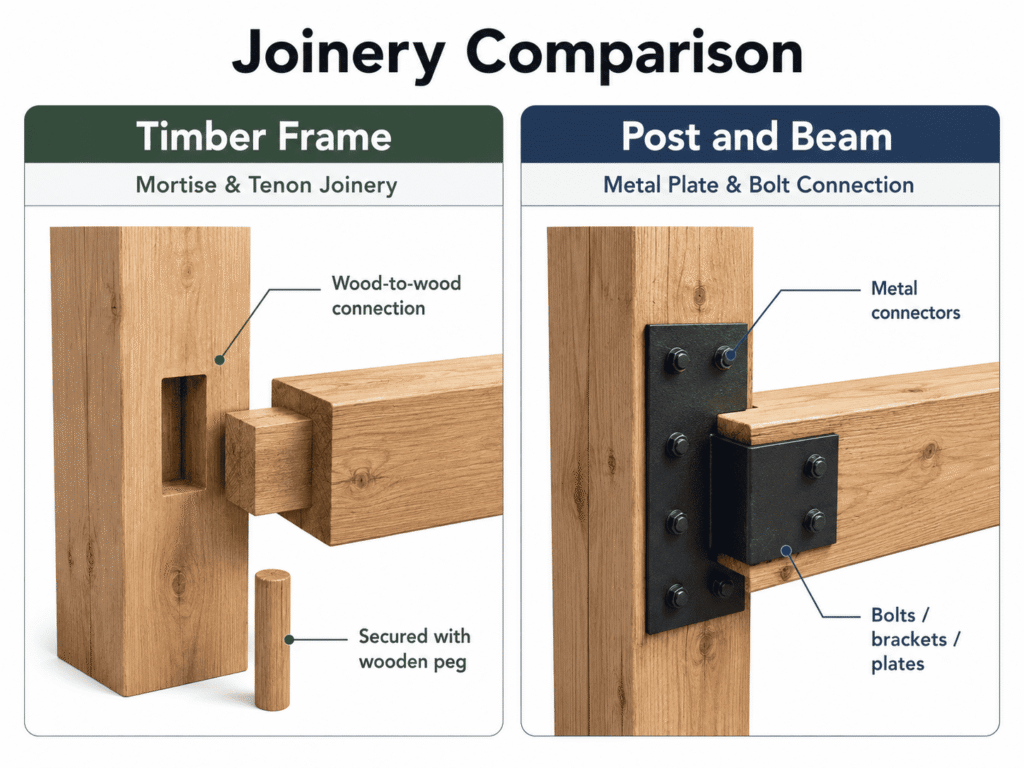
The biggest difference between timber frame and post and beam construction is how the frame is connected.
Timber frame construction relies on precise wood joinery. The strength comes from the way each timber is cut, fitted, and locked into place. This requires careful planning, accurate measurements, and experienced craftsmanship. The result is a clean frame with fewer visible metal parts.
Post and beam construction relies more on structural hardware. Posts and beams still carry the load, but metal plates, bolts, and brackets help secure the connections. In some designs, these connectors are visible and become part of the building’s style. In other designs, they may be hidden for a cleaner appearance.
This difference affects the final look, labor cost, construction timeline, and overall design character of the project.
Materials Used in Timber Frame and Post and Beam Construction
Both timber frame and post-and-beam buildings use large wood members, but the materials used can vary.
Timber frame construction often uses solid wood timbers selected for strength, appearance, and long-term performance. Since the wood is usually exposed, the timber’s quality, grain, and finish are important.
Post and beam construction may also use solid wood, but it can include engineered wood products such as glulam beams or laminated structural members. Engineered wood can be useful when a project needs longer spans, consistent performance, or specific load-bearing capacity.
In both methods, the right material depends on the building design, span length, local code requirements, moisture exposure, budget, and whether the beams will remain visible.
Strength and Structural Performance
Both timber frame and post-and-beam construction can be strong when properly designed and built. The strength does not come from the name of the method alone. It comes from good engineering, quality materials, proper load transfer, accurate layout, and skilled installation.
Timber framing creates strength through interlocking wood joints. When the frame is designed correctly, the joinery helps the structure work as a complete system.
Post-and-beam construction derives its strength from posts, beams, and hardware connections. The metal plates, bolts, and brackets must be properly sized and installed so the structure can safely carry loads.
For any residential or commercial project, a qualified builder or framing contractor should consider the building size, roof loads, span requirements, foundation support, and long-term movement of the wood.
Appearance and Design Style
Timber framing is often chosen for its traditional beauty. The visible wood joinery, large beams, and natural finish create a warm and timeless look. It works especially well in custom homes, cottages, lodges, and spaces where the frame is meant to be a major design feature.
Post-and-beam construction can also create a beautiful exposed-beam look. Depending on the design, it can feel rustic, modern, industrial, or simple and natural. If metal plates and bolts are visible, they may add a bold structural style. If the hardware is concealed, the final look can be cleaner and more refined.
For homeowners who want a handcrafted, heritage-style appearance, timber framing is often the stronger choice. For those who want exposed beams with greater design flexibility, post-and-beam construction may be more practical.
Cost Difference Between Timber Frame and Post and Beam
Timber frame construction usually costs more than post-and-beam construction because it requires detailed joinery, skilled labor, custom fabrication, and more planning time. Every joint must be carefully designed and cut, which increases the level of craftsmanship involved.
Post-and-beam construction can be more cost-effective because it often uses simpler connections and may take less time to assemble. However, the final cost still depends on the structure’s size, the type of wood, engineering requirements, hardware, finishes, labor, and project complexity.
A basic post and beam structure may cost less than a traditional timber frame, but a highly customized post and beam design with premium materials and concealed hardware can still become expensive.
Pros of Timber Frame Construction
Timber frame construction offers a premium look and strong architectural character. Its main benefits include:
- Traditional wood-to-wood joinery
- Beautiful exposed timber appearance
- Strong handcrafted design
- Excellent for open floor plans and vaulted ceilings
- Long-lasting structural character
- High visual value for custom homes
Timber framing is a strong option when the frame itself is part of the home’s identity and design.
Cons of Timber Frame Construction
Timber framing is not always the best fit for every project. Common drawbacks include:
- Higher cost
- Longer planning and fabrication time
- Need for specialized craftsmanship
- More complex design coordination
- Less practical for simple or budget-focused builds
For projects where speed, cost, and standard framing methods are the main priorities, post-and-beam or conventional wood framing may be more suitable.
Pros of Post and Beam Construction
Post-and-beam construction is flexible and practical for many building types. Its main advantages include:
- Strong structural support
- Faster installation in many cases
- Suitable for homes, cabins, additions, decks, and commercial buildings
- Works with modern and rustic designs
- Can use engineered wood for longer spans
- Often more cost-effective than full timber framing
This method is a good choice when a project needs the look and strength of large wood members without traditional joinery.
Cons of Post and Beam Construction
Post-and-beam construction also has limitations. Common drawbacks include:
- Metal connectors may be visible
- Hardware can affect the final appearance
- Poorly installed connections can weaken performance
- Moisture around metal connections must be managed properly
- It may not offer the same handcrafted appeal as traditional timber framing
A post-and-beam structure can still be strong and attractive, but it must be properly designed and installed.
Which Is Better: Timber Frame or Post-and-Beam?
Neither method is automatically better for every project. The better choice depends on the building’s purpose.
Timber frame construction is better suited to projects where craftsmanship, traditional joinery, and the beauty of exposed wood are major priorities. It is ideal for premium custom homes, cottages, lodges, and architectural spaces where the frame is meant to stand out.
Post-and-beam construction is better for projects that require strength, open space, design flexibility, and a more practical construction process. It is often a strong choice for additions, decks, cabins, modern homes, commercial spaces, and exposed-beam designs with a controlled budget.
For homeowners and builders comparing timber frame vs post-and-beam, the best decision should be based on design goals, budget, engineering needs, timeline, and long-term performance.
Professional Framing Support for Strong Structures
Choosing the right framing method is easier when the project is reviewed by experienced framing professionals. A strong frame affects the safety, durability, layout, and long-term performance of the entire building.
Woodzio Framing supports residential, custom home, and commercial framing, as well as structural modification projects, with careful planning, accurate layout, and dependable workmanship. Whether a project requires standard wood framing, exposed structural elements, or a more customized approach, the goal is always the same: a strong, reliable frame that supports the next stage of construction with confidence.
FAQ’s
What is the main difference between a timber frame and a post and beam?
The main difference is the connection method. Timber frame construction uses traditional wood joinery and wooden pegs, while post-and-beam construction typically uses metal plates, bolts, brackets, or other fasteners.
Is a timber frame stronger than a post and beam?
Both methods can be strong when designed and built correctly. Timber framing relies on interlocking wood joinery, while post-and-beam construction relies more on engineered hardware connections.
Is a post and beam cheaper than a timber frame?
Post-and-beam construction is often more affordable because the connections are usually simpler and less labor-intensive. Timber framing usually costs more because it requires specialized joinery and craftsmanship.
Can post-and-beam construction create open floor plans?
Yes. Post-and-beam construction can create open interiors, tall ceilings, wide spans, and exposed-beam designs because the posts and beams carry much of the structural load.
Which method is better for custom homes?
Timber framing is often better for a high-end, handcrafted look. Post and beam is often better for homeowners who want exposed beams, structural strength, and more design flexibility at a more practical cost.