
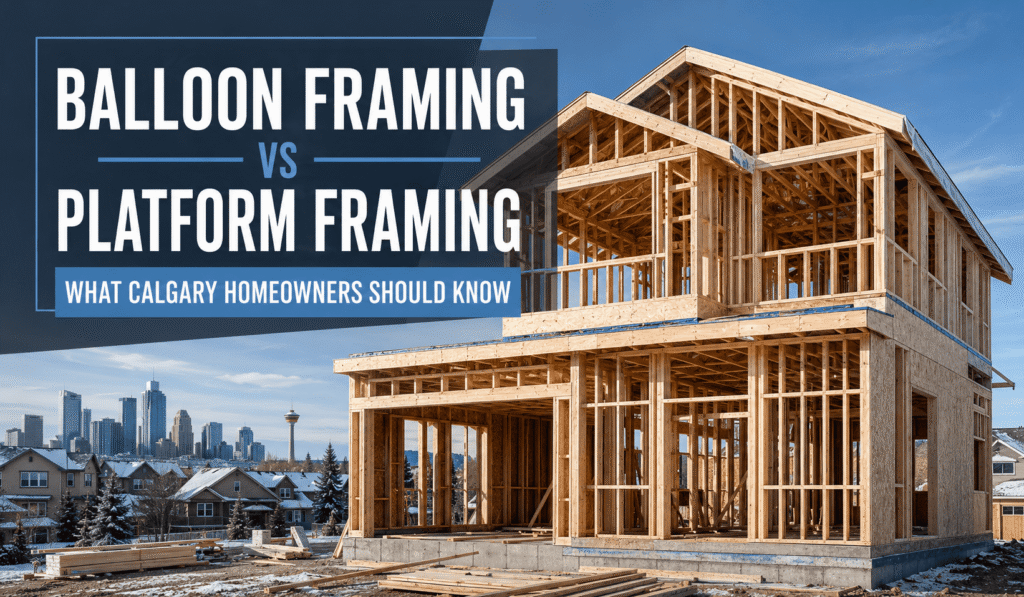
When planning a new home, addition, basement development, or structural renovation in Calgary, the framing method behind the walls can affect strength, fire safety, insulation, renovation difficulty, and long-term performance. One common comparison homeowners may come across is balloon framing vs platform framing.
Platform framing is the standard method used in most modern residential construction, while balloon framing is an older system often found in older homes. Both methods use wood studs, joists, plates, and structural connections, but the way they are built is very different.
Understanding the difference helps homeowners, builders, and property owners make safer and better-informed decisions before starting framing or structural modification work. A professional framing contractor can inspect the structure, identify the framing system, and recommend the right approach before walls are opened or changed.
What Is Platform Framing?
Platform framing is a wood-frame construction method in which each floor is built as a separate level. The floor joists and subfloor create a working platform, then the walls for that level are framed and raised on top. Once that floor is complete, the next floor system is installed above it.
This method is commonly used in modern residential framing because it is practical, efficient, and easier for framing crews to control. It allows workers to build on a stable surface at each stage, rather than handling very long studs that span multiple floors.
In a typical platform-framed home, the load moves from the roof and upper walls down through each level of framing until it reaches the foundation. The floor system between stories also helps separate wall cavities, which supports better fire safety compared to older framing methods.
For new homes, custom home framing, additions, and residential framing projects in Calgary, platform framing is usually the most practical and reliable choice.
How Platform Framing Works
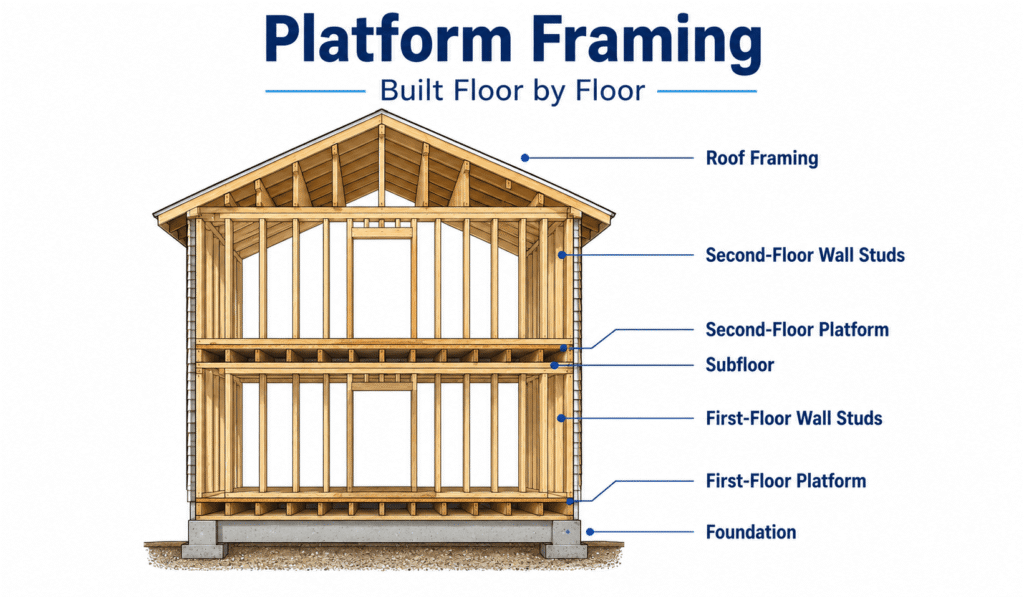
Platform framing usually follows a clear construction sequence. First, the foundation or basement level is prepared. The first floor system is framed with joists, beams, rim boards, and subfloor sheathing. After that, wall sections are built on the platform and raised into position.
Once the walls are secured, the next floor platform is built above them. This process continues floor by floor until the roof framing is complete.
This floor-by-floor method gives framing contractors better access, safer working conditions, and more control over wall alignment, floor levels, fasteners, and structural connections. It also works well with engineered wood products, insulation planning, vapour barriers, electrical rough-ins, plumbing, HVAC, and drywall preparation.
For Calgary homeowners, platform framing is especially useful for projects that need accurate framing, clean layouts, and inspection-ready construction.
Why Platform Framing Is Common in Modern Homes
Platform framing became the preferred method because it solves many practical construction problems. It uses standard lumber lengths, makes each stage easier to build, and creates a safer working surface for framing crews.
It also supports modern home designs. Open-concept layouts, large windows, attached garages, basement developments, and custom roof structures can be planned more efficiently with platform framing. The method also makes it easier to separate floors, improve air sealing, and coordinate mechanical systems.
For builders and homeowners, this means fewer complications during construction and a better foundation for the next stages of the project, including roofing, insulation, drywall, and finishing.
What Is Balloon Framing?
Balloon framing is an older wood-framing method in which wall studs run continuously from the lower sill to the roof plate. Instead of stopping at each floor level, the studs pass by the intermediate floors. The floor joists are usually connected to the long studs using ledger boards or similar support details.
This method was widely used in older North American homes before platform framing became the standard. It was useful when long lumber was easier to access and when builders wanted continuous vertical framing members.
However, balloon framing is much less common in modern construction because it can create safety and renovation challenges. The biggest concern is that open wall cavities may run from the basement or lower level to the attic. If proper fire blocking is missing, those cavities can allow fire and smoke to move upward through the structure more quickly.
How Balloon Framing Works
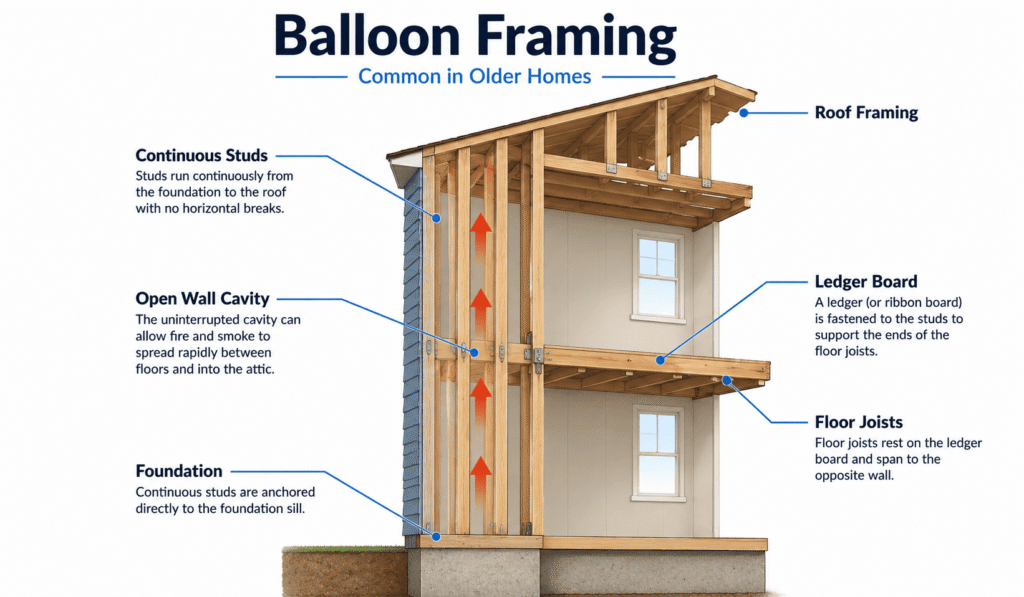
In balloon framing, the wall studs extend past the floor levels instead of stopping at each storey. Floor joists are attached to or alongside the studs, often using ledger boards or notched supports. This creates a different load path compared to platform framing.
Because there is no full-floor platform interrupting the wall cavity, the open spaces within the wall can continue vertically. This is one of the main reasons balloon-framed homes require careful inspection before renovation.
When a homeowner plans to remove a wall, widen a doorway, add a large window, or modify the structure, the framing system must be understood first. Balloon framing does not always behave the same way as modern platform framing, especially when load-bearing walls or floor connections are involved.
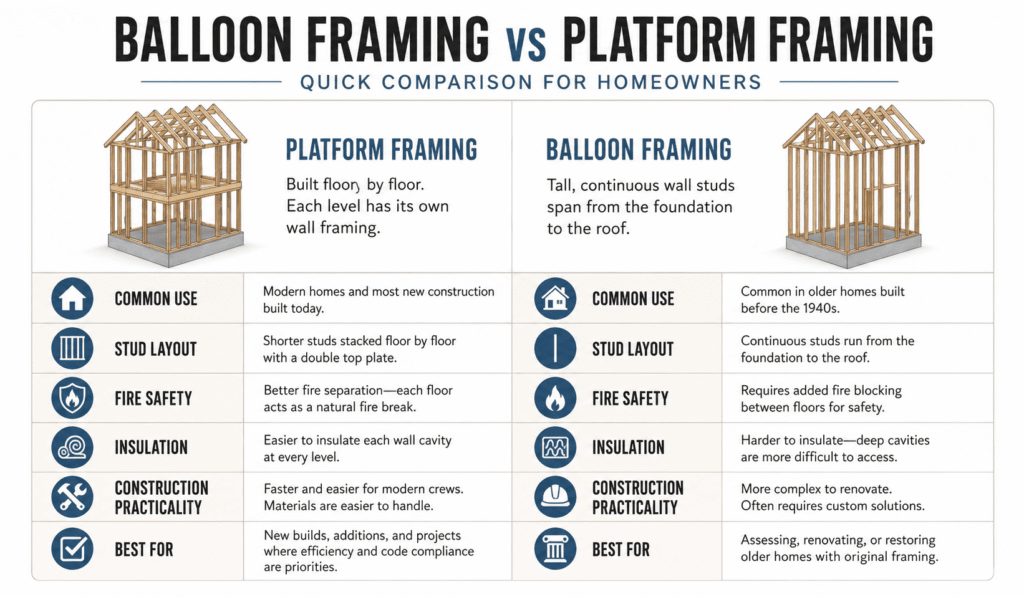
Balloon Framing vs Platform Framing: Key Differences
| Feature | Platform Framing | Balloon Framing |
| Common Use | Modern homes and additions | Older homes and heritage properties |
| Stud Length | Shorter studs for each floor | Long continuous studs across floors |
| Construction Method | Built floor by floor | Studs run from lower level to roof |
| Fire Safety | Better natural separation between levels | Needs proper fire blocking to reduce vertical spread |
| Insulation | Easier to install and detail | More difficult in continuous wall cavities |
| Renovation Difficulty | Usually easier to modify | Requires careful inspection |
| Labour Practicality | Easier for modern crews | More complex due to long studs |
| Best For | New homes, additions, custom builds | Older home assessment and restoration |
The biggest difference between balloon framing and platform framing is how each floor level is handled. In platform framing, each level is separated by a floor platform. In balloon framing, the vertical studs extend past the floor level, affecting fire safety, insulation, and structural modifications.
Advantages of Platform Framing
Platform framing is the preferred choice for most modern wood-framed homes because it offers practical benefits during construction and after completion.
Better Fire Separation
Because each floor is framed separately, the floor platform helps interrupt vertical wall cavities. This does not remove the need for proper fire blocking in all required areas, but it gives platform framing a built-in advantage over unblocked balloon framing.
Easier and Safer Construction
Framing crews can work from a solid platform at every stage. This makes wall layout, lifting, fastening, and quality control easier. It also reduces the need to handle very long wall studs across multiple floors.
Better Fit for Modern Homes
Platform framing works well with modern residential construction needs, including open layouts, engineered beams, insulation, vapour barriers, mechanical systems, and code inspections.
Efficient for Additions and Custom Homes
For homeowners planning custom home framing, second-storey or garage additions, basement framing, or residential framing in Calgary, platform framing offers a flexible, organized construction method.
Advantages of Balloon Framing
Even though balloon framing is not the standard for new homes, it still has some structural benefits in certain older buildings.
Continuous Vertical Members
Because the studs run continuously, balloon framing can provide a direct vertical load path from the roof to the lower structure. This is one reason many older homes have remained standing for decades.
Reduced Shrinkage Between Floor Levels
Platform framing has horizontal framing layers at each floor, and wood shrinkage can happen across those members. Balloon framing has fewer horizontal interruptions in the wall studs, which can reduce some types of vertical movement.
Useful in Older Home Restoration
In older homes, balloon framing may need to be preserved, repaired, or carefully modified during renovation. A contractor who understands old-wood framing methods can help avoid unsafe alterations to load-bearing walls, floor joists, and wall cavities.
Main Problems with Balloon Framing
The biggest concern with balloon framing is not that it is always weak. The concern is that it behaves differently from modern framing and may require additional safety work.
Fire Safety Concerns
Open vertical wall cavities can act like hidden paths for fire and smoke. If a fire starts in a lower level, it can move upward inside the wall cavity if blocking is missing. This is why fire stopping and fire blocking are important when renovating older balloon-framed homes.
Harder Insulation Work
Because wall cavities may extend across multiple levels, installing insulation properly can be more difficult. Gaps around joists, ledgers, and old framing members can reduce energy performance if the work is not carefully detailed.
More Complicated Structural Changes
Removing walls, widening openings, or changing floor layouts in a balloon-framed home can be risky without proper assessment. The load path may differ from that of a modern platform-framed home. For structural modification projects, a framing contractor may need to work with an engineer before removing or altering any load-bearing wall.
How to Tell If a Home Has Balloon Framing
A homeowner may suspect balloon framing if the house is older, especially if it was built before platform framing became common. However, age alone is not enough to confirm the framing method.
A framing contractor may inspect:
- Basement rim joist areas
- Floor joist connections
- Attic wall framing
- Open wall cavities
- Stud continuity between floors
- Ledger board or joist pocket details
If studs appear to run continuously past the floor level, the home may have balloon framing. Before any renovation, this should be confirmed properly.
Framing Considerations for Calgary and Alberta Homes
In Calgary and Alberta, framing decisions should account for local climate, seasonal movement, structural loads, insulation needs, and permit expectations. Cold weather performance matters because poor framing and insulation details can affect comfort, air sealing, and energy efficiency.
For modern homes, garages, additions, and custom builds, platform framing is usually the right method because it supports efficient construction and easier coordination with insulation, electrical, plumbing, HVAC, and drywall work.
For older homes, especially those undergoing structural modification, framing should be inspected before walls are removed or openings are changed. A professional framing contractor can help identify load-bearing walls, assess framing conditions, and ensure the structure is ready for the next stage of construction.
Which Is Better: Balloon Framing or Platform Framing?
For most modern homes, platform framing is the better choice because it is safer, faster to build, easier to insulate, and better suited to modern residential construction. It also works well for custom homes, additions, garage builds, basement framing, and structural framing projects.
Balloon framing is not usually better for new construction, but it matters when renovating older homes. If a home already has balloon framing, the goal is not always to replace the entire system. Instead, the structure should be inspected, fire blocking added where needed, and any load-bearing changes planned carefully.
In simple terms, platform framing is best for most new builds, while balloon framing requires special care during renovations of older homes.
When Should Homeowners Call a Framing Contractor?
A homeowner should call a framing contractor when planning a new home, building an addition, developing a basement, removing or changing a wall, creating larger window or door openings, renovating an older home, or preparing for structural modification.
Framing is not only about placing studs and joists. It is the building’s structural skeleton. If the framing is not planned correctly, problems can appear later during drywall, finishing, roofing, insulation, or inspection.
Working with experienced wood-framing contractors helps ensure the structure is properly planned, accurately built, and ready for the next stage of construction.
Work With Calgary’s Trusted Wood Framing Contractors
Understanding balloon framing vs platform framing helps homeowners make better decisions before starting a build or renovation. Platform framing is the modern standard for most new homes and additions, while balloon framing requires extra care when found in older properties.
Woodzio Framing provides residential, custom home, and commercial framing, as well as structural modification services for projects that require strong, accurate, and reliable wood framing. For homeowners and builders in Calgary, working with experienced framers helps keep the project safe, organized, and ready for the next stage of construction.
FAQ’s
Is platform framing better than balloon framing?
For most modern homes, platform framing is better because it is easier to build, easier to insulate, safer for fire separation, and more compatible with current residential construction practices. Balloon framing is common in older homes and requires careful inspection during renovations.
Is balloon framing still used today?
Balloon framing is rarely used in modern residential construction. It may still be found in older homes or certain restoration projects, but platform framing is the standard method for most new wood-framed homes.
Why is balloon framing a fire risk?
Balloon framing can create continuous wall cavities between floors. If fire blocking is missing, fire and smoke can move upward through those cavities. That is why older homes with balloon framing often need fire-stopping upgrades during renovation.
Can a balloon-framed house be renovated?
Yes, but it should be inspected first. Renovating a balloon-framed home may require fire blocking, insulation improvements, and engineered support if load-bearing walls or openings are being changed.
How does a contractor know which framing method a home has?
A contractor can inspect the basement, floor joist connections, attic framing, and wall cavities. Continuous studs passing through floor levels are a common sign of balloon framing.